
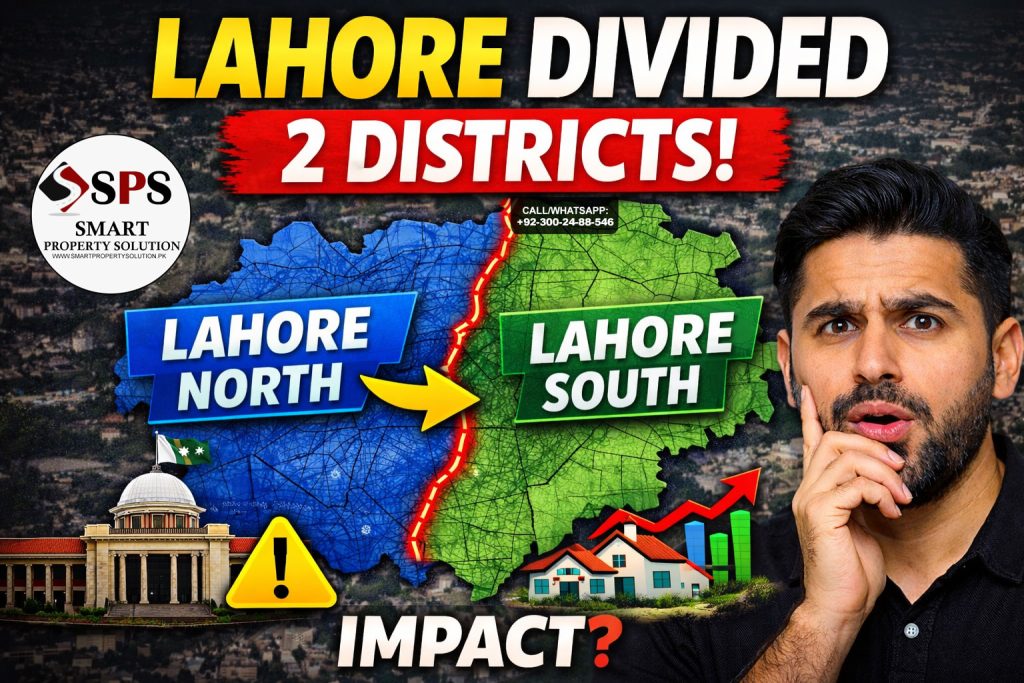
The announcement that Lahore is divided into 2 districts marks one of the most significant administrative reforms in the city’s recent history. As Lahore continues to expand beyond traditional boundaries, the government’s decision reflects a long-term strategy to manage population pressure, streamline governance, and reshape future development.
This move is not just a bureaucratic adjustment—it has serious implications for residents, businesses, and real estate investors across the city.
Why the Decision Was Inevitable
Lahore has evolved into a megacity with complex challenges. From traffic congestion to service delivery delays, a single district administration has struggled to efficiently manage such a vast urban footprint.
Key drivers behind the decision include:
- Overburdened administrative departments
- Delays in municipal approvals and land records
- Rising law and order responsibilities
- Uneven development between central and peripheral areas
By implementing a dual-district model, authorities aim to reduce operational load and improve decision-making speed.
How the Two-District Model Will Work
Under the new framework, Lahore will be divided into two independent administrative districts, each with its own leadership, departments, and operational structure.
Separate District Administrations
Each district will likely have:
- Its own Deputy Commissioner
- Independent police command
- Separate municipal and development authorities
This structure allows for localized problem-solving rather than a one-size-fits-all approach.
Urban Planning and Infrastructure Impact
One of the most critical outcomes of Lahore divided into 2 districts is improved urban planning.
Focused Development
Instead of spreading resources thin across the entire city, authorities can now:
- Prioritize infrastructure where it’s most needed
- Launch district-specific development projects
- Improve road networks and public utilities
This is expected to significantly benefit underdeveloped and fast-growing zones.
Real Estate Market: Winners, Watch Zones, and Opportunities
The real estate sector is among the biggest stakeholders in this decision.
Short-Term Market Response
Initially, the market may experience:
- Confusion in documentation processes
- Temporary pauses in approvals
- Speculative price movement
These are normal during administrative transitions.
Long-Term Property Growth
Historically, new district formations result in:
- Higher land value near district offices
- Increased commercial activity
- Stronger investor confidence
Areas falling under newly empowered district centers may witness faster appreciation.
Impact on Businesses and Commercial Activity
For businesses, this division could mean:
- Faster licensing and NOCs
- Improved regulatory oversight
- Better access to local authorities
Commercial zones in both districts are expected to become more structured and investor-friendly, especially retail and mixed-use developments.
What Residents Should Expect
For everyday citizens, the benefits include:
- Faster service delivery
- Improved waste management
- Better traffic control
- Quicker complaint resolution
By decentralizing authority, the government aims to bring administration closer to the people.
Challenges During the Transition Phase
While the benefits are long-term, some short-term challenges may arise:
- Reallocation of records and databases
- Jurisdictional confusion
- Adjustment period for government departments
However, such challenges are common and typically temporary.
Expert Insight: Is This Good for Lahore?
Urban planning experts widely believe that dividing Lahore into two districts is a necessary evolution, not a political move. As cities grow, administrative restructuring becomes essential to sustain livability and economic growth.
If implemented transparently and efficiently, this step could set a precedent for other major Pakistani cities.
Final Thoughts
The move that Lahore is divided into 2 districts represents a bold step toward smarter governance and sustainable urban growth. While the transition will take time, the long-term outlook suggests improved administration, enhanced infrastructure, and new opportunities—particularly in real estate and commercial development.
For residents, investors, and businesses alike, staying informed during this transition will be key to making the most of the changes ahead. Contact us and subscribe our youtube channel.